
Exhibitors : Previous
Midland Moonshiners
An On30 Scale Layout by the Slim Gauge Circle
Coal Valley Mining
| By | Phil Saint |
| Scale | G |
| Gauge | 45mm |
| Size | 140cm x 70cm |
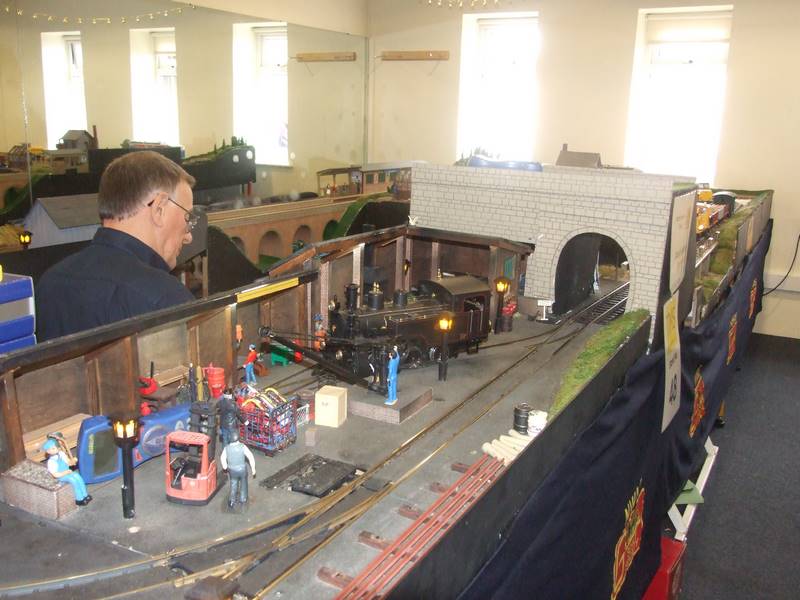
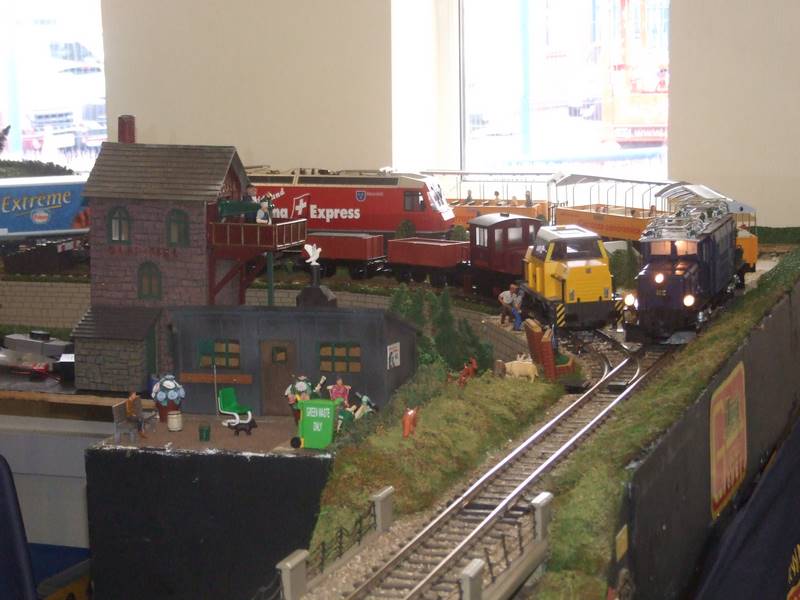
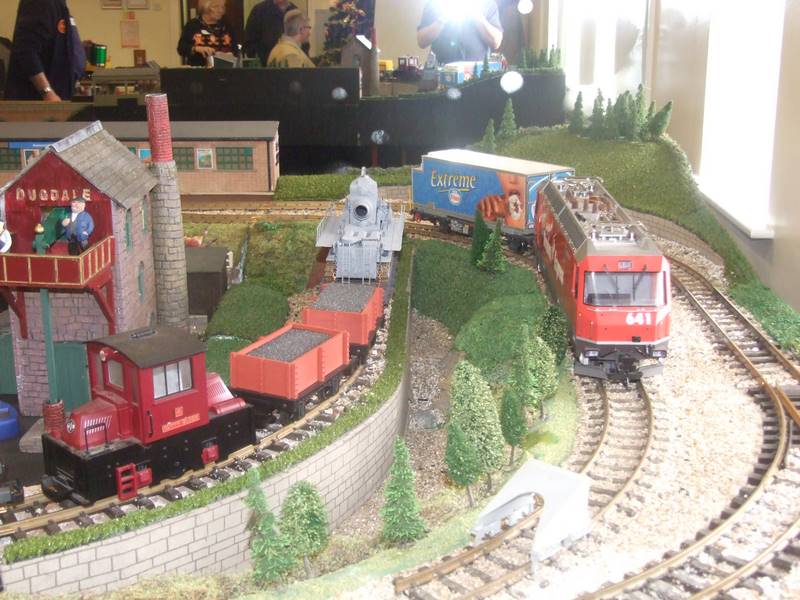
The railway was purchased some years ago from Mike Thornhill (then called the chicken grit.) The idea was to use it as a promotional tool for the society. A lot has happened since then! On one of our first showing it took 2 1/2hrs to get it running. I have since put a lot of hours in making brackets and machining box section steel to fit them., so that now every leg fits anywhere. The track is a single loop with sidings, an industrial feel on side joined by two bridges to a countryside.
Originally built for small fieldbahn locos we can now run most types. Power is supplied by Massoth 1200z and wireless Navigators DCC. Most locos have sound and are “chipped” although analogue ones can be run with a pseudo DC. It is freelance and features German, Swiss & whatever fits in.
Children look out for the Krockodil chasing the hand cart.
-
 Coal Valley Mining
-
Coal Valley Mining
Coal Valley Mining
-
Coal Valley Mining
Coal Valley Mining
-
Coal Valley Mining
Coal Valley Mining
https://narrowgaugenorth.org.uk/index.php/societies/previous-years/85-public-news/exhibitors-previous?start=20#sigProIdf16a5293e9
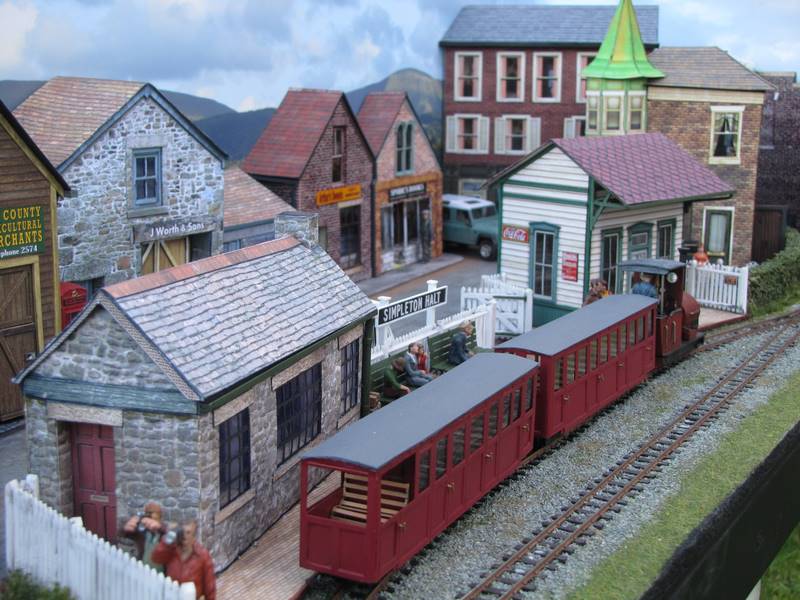
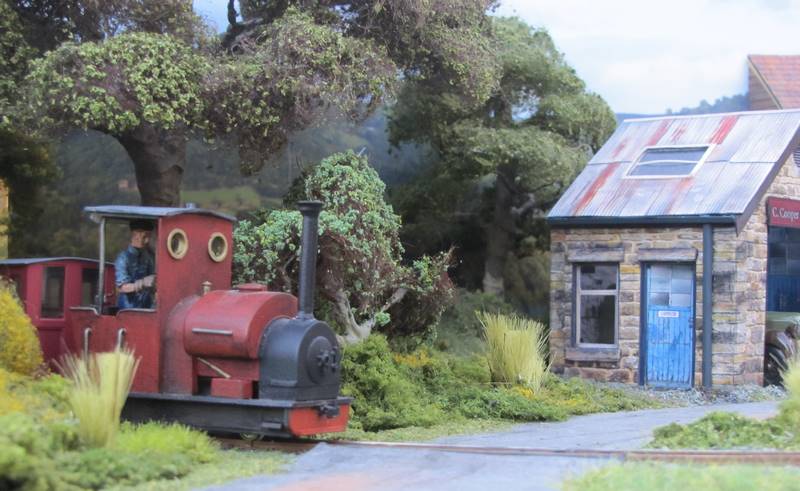
Simpleton
| By | Mike Godfrey |
| Scale | 7mm/ft |
| Gauge | 9mm |
| Size | 140cm x 70cm |
The experience of my previous portable 09 exhibition layout, ‘Perry Vale’ (NL202, 213, 214) ), left me with good lessons learned and a hankering to try something much simpler. I resolved to go for no complicated electrical wiring; just two power input points. There would be no electric point motors; everything would be manual, using the GEM ‘Mercontrol’ point control system. All the track is PECO, much of it Set Track to avoid ‘binding’ issues with tight curves using flexible track. Instead of multiple baseboards with the need for electrical connectors and well aligned track at the baseboard joint, there would be one baseboard, 54” by 26”. This also meant the layout was easily moved in my car, by one person, and didn’t need a borrowed van for transport and a three man crew!
‘Simpleton’ has lived up to its aims; it has provided a lot of fun; a detailed scenic layout in a compact space, and in a reasonably short period of time. The layout has proved reliable in operation, easy to transport and set up and has expanded my skills and opened me to yet another area of the hobby…so, what next…I’m looking into radio control 0 Gauge trains now; narrow gauge of course!
https://narrowgaugenorth.org.uk/index.php/societies/previous-years/85-public-news/exhibitors-previous?start=20#sigProIdde3c23a35e
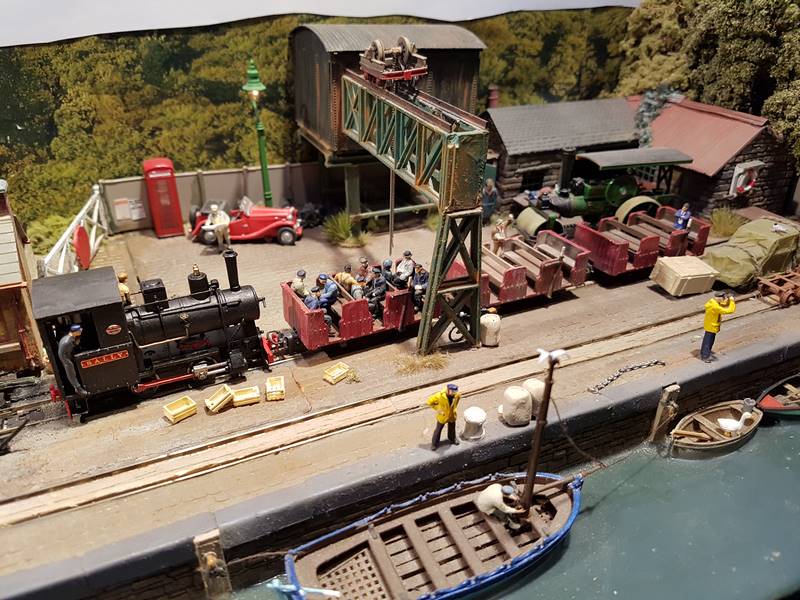
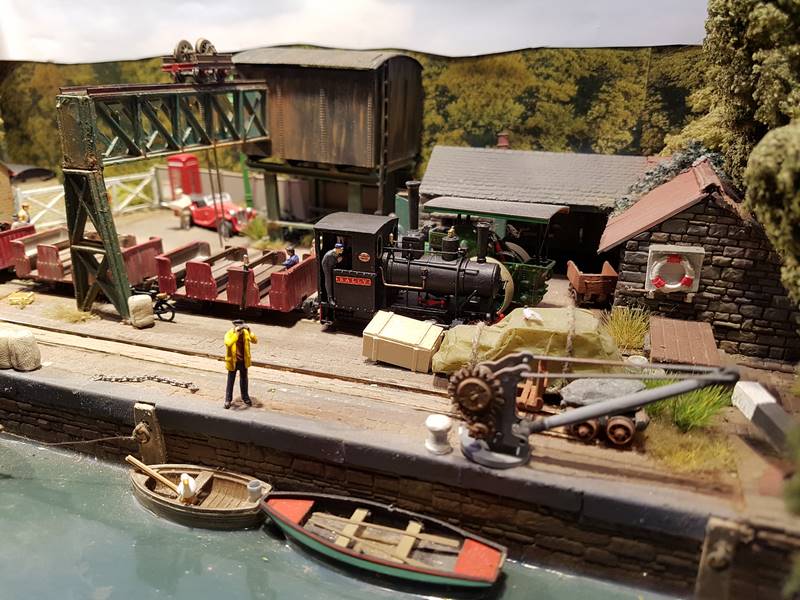
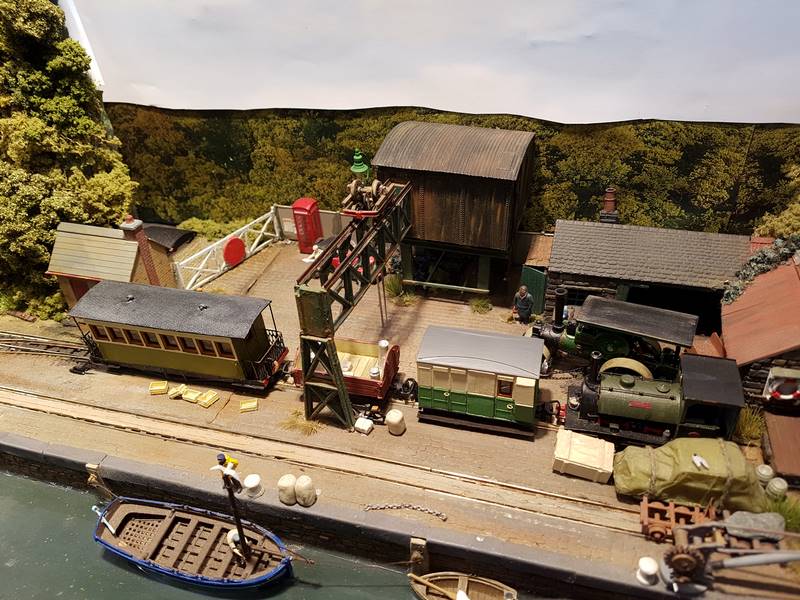
Arnold Lane Wharf - Isle of Stoner Railway
| By | John Wooden |
| Scale | 4mm/ft |
| Gauge | 9mm |
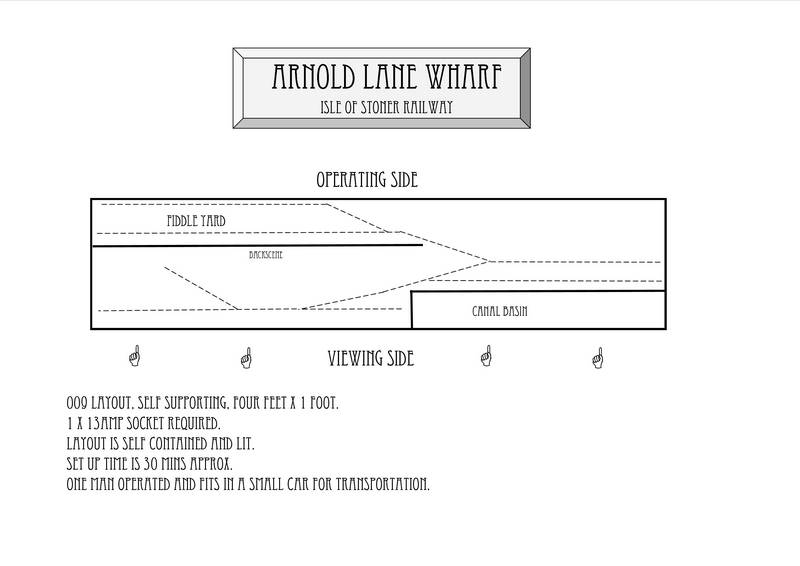
| Size | 4' x 1' |
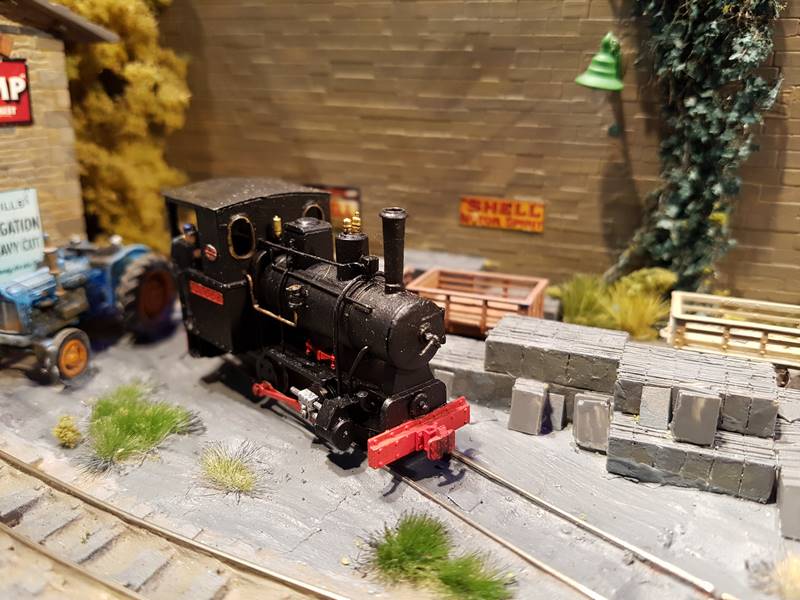
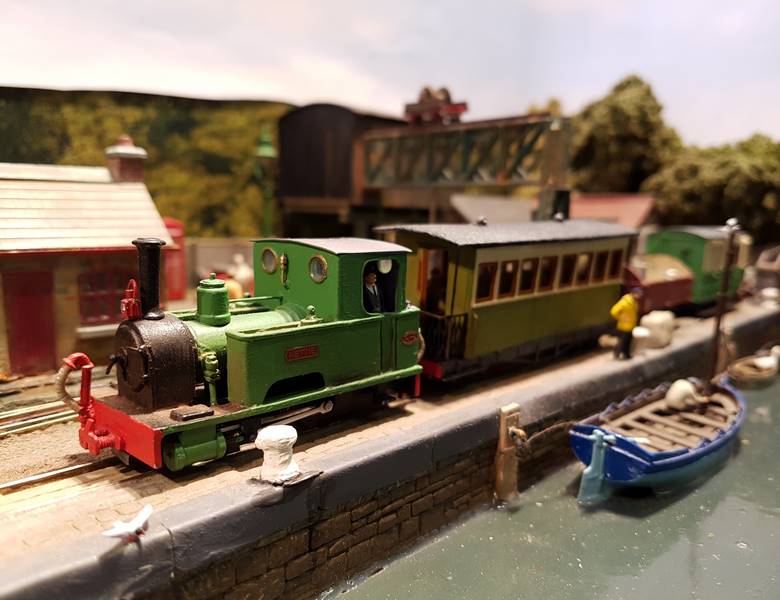
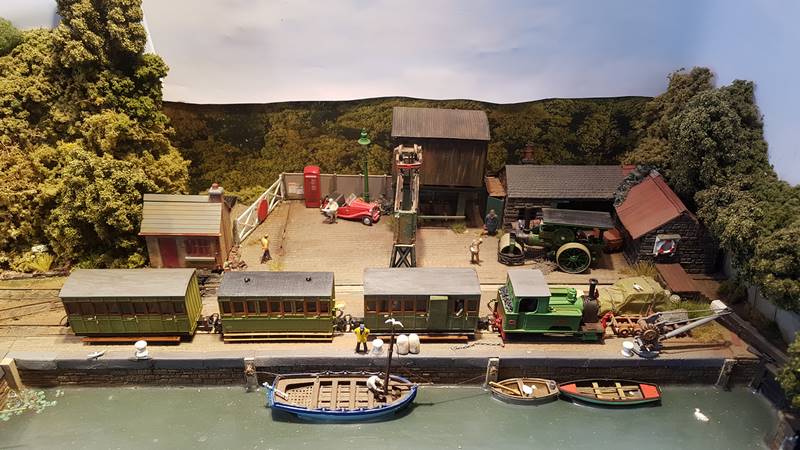
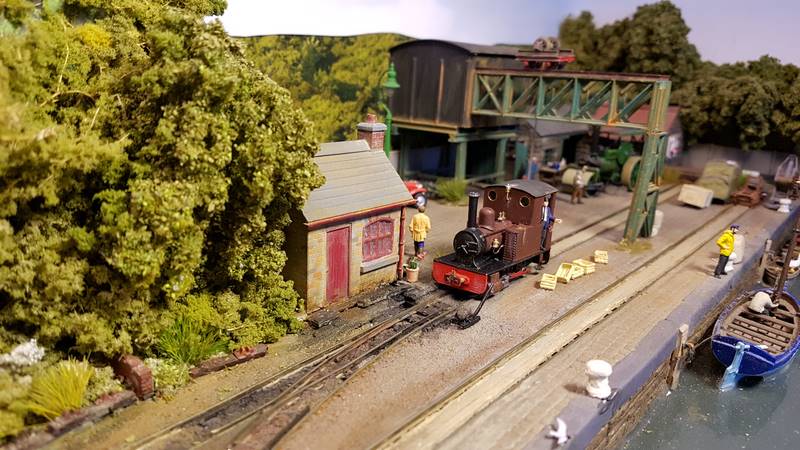
The layout represents a small section of a larger railway on an imaginary Island somewhere between Cornwall and France. It is a little used backwater of the railway but on a day like today there are lots of trains to see.
The layout is 009, meaning that the track is 9mm gauge and the scale is 4mm to foot. Most of the rolling stock and locomotives are kit built or heavily modified ready to run items.
One of the main products of the island is a green cheese with a herbal marbling known as Stoner White; this has led to the island’s well known saying – ‘Eat the cheese and relax.’ We welcome your visit and hope you enjoy your stay on the island.
-
Arnold Lane Wharf - Isle of Stoner Railway
Arnold Lane Wharf - Isle of Stoner Railway
-
Arnold Lane Wharf - Isle of Stoner Railway
Arnold Lane Wharf - Isle of Stoner Railway
-
Arnold Lane Wharf - Isle of Stoner Railway
Arnold Lane Wharf - Isle of Stoner Railway
-
Arnold Lane Wharf - Isle of Stoner Railway
Arnold Lane Wharf - Isle of Stoner Railway
-
Arnold Lane Wharf - Isle of Stoner Railway
Arnold Lane Wharf - Isle of Stoner Railway
-
Arnold Lane Wharf - Isle of Stoner Railway
Arnold Lane Wharf - Isle of Stoner Railway
-
Arnold Lane Wharf - Isle of Stoner Railway
Arnold Lane Wharf - Isle of Stoner Railway
-
Arnold Lane Wharf - Isle of Stoner Railway
Arnold Lane Wharf - Isle of Stoner Railway
https://narrowgaugenorth.org.uk/index.php/societies/previous-years/85-public-news/exhibitors-previous?start=20#sigProId1a6edd7357
Newby Conor
| By | Andrew Woolass |
| Scale | HOe |
| Gauge | 9mm |
| Size | 720mm x 390mm |
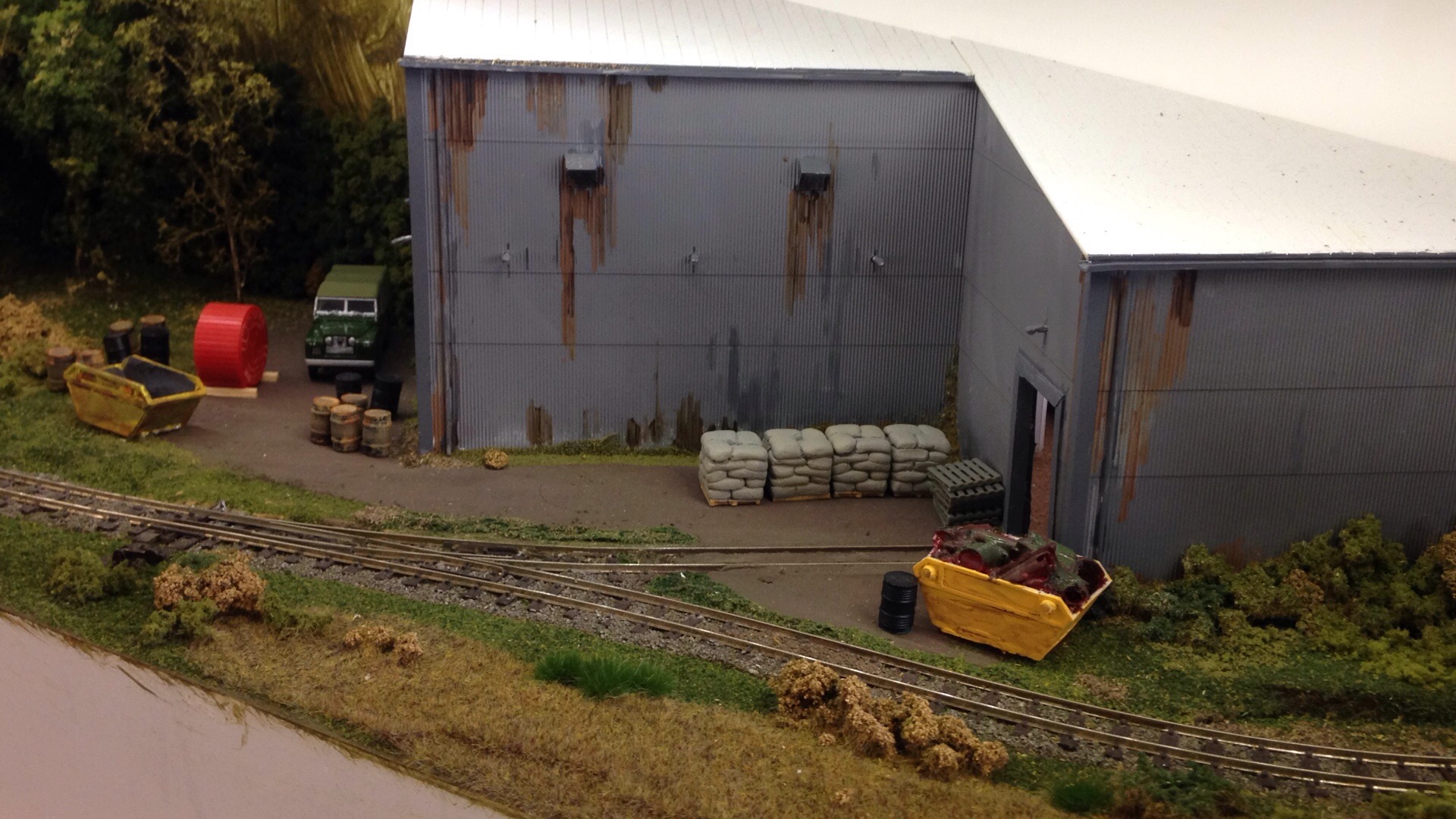
Newby Conor is a small continuous run layout built on an old blockboard shelf. It was built to trial Cobalt point motors and once it fulfilled that purpose I wished to experiment with the 'apron stage' presentation concept. That done, I got a little carried away with the scenery.
https://narrowgaugenorth.org.uk/index.php/societies/previous-years/85-public-news/exhibitors-previous?start=20#sigProId90baa584ff
Hulme End
| By | Dr G Alan Gee & Halifax Model Railway Club |
| Scale | 4mm/ft |
| Gauge | 9mm |
| Size | 11' x 2'3" |
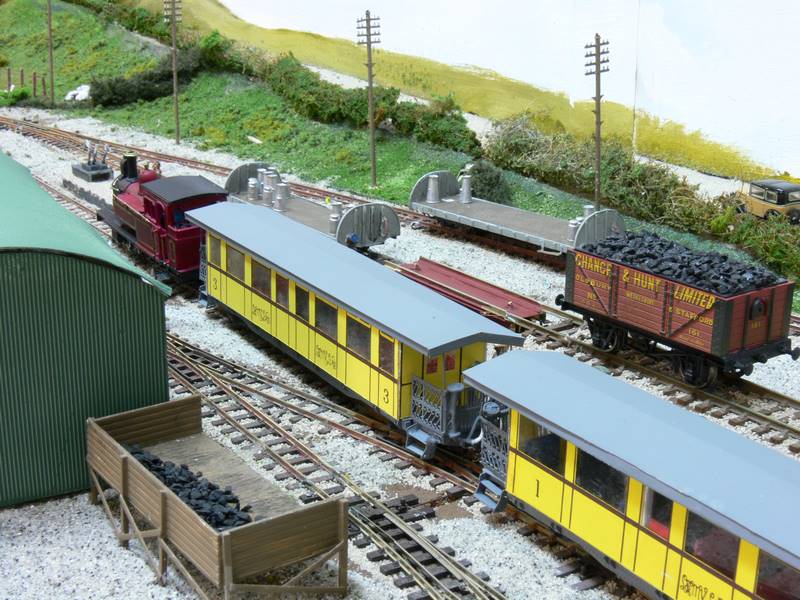
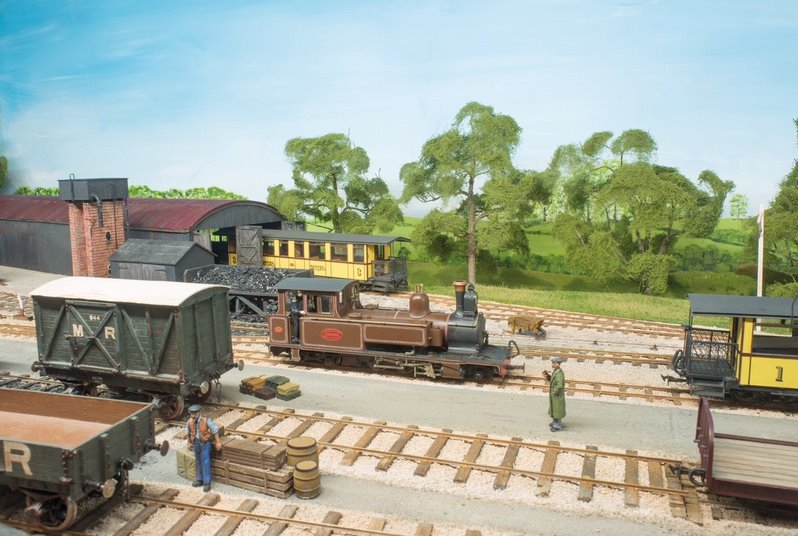
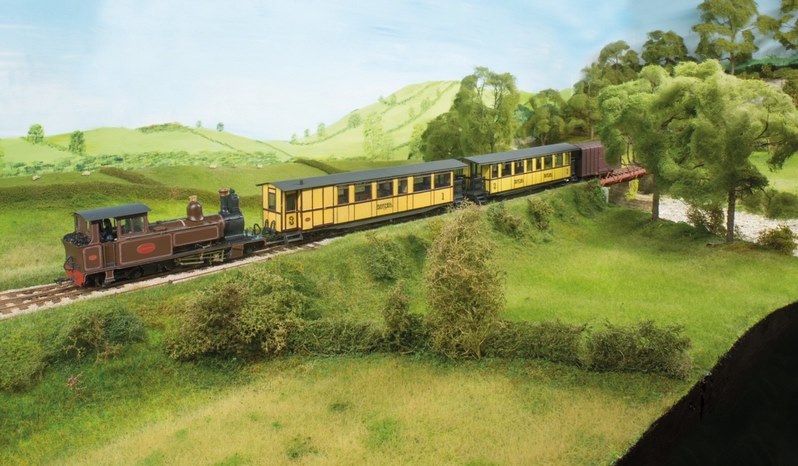
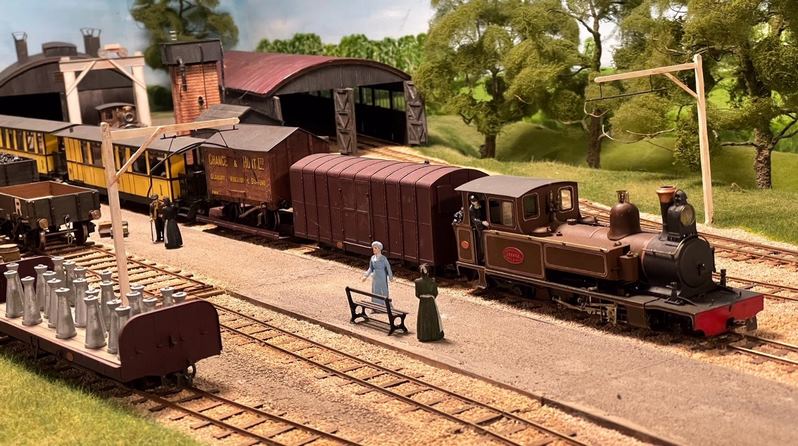
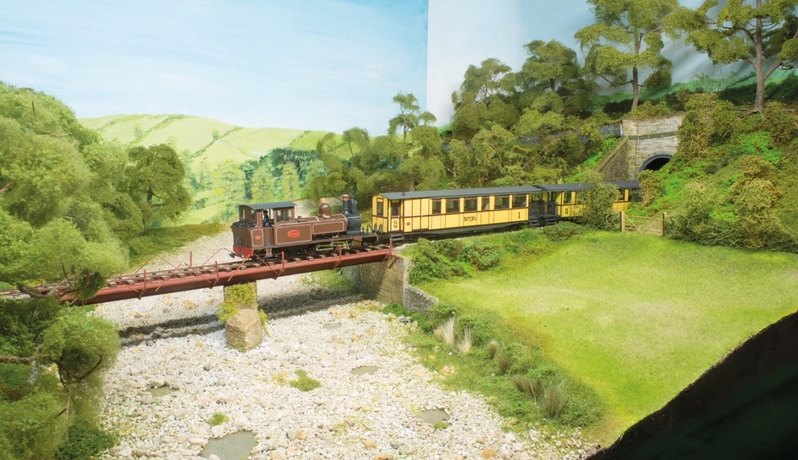
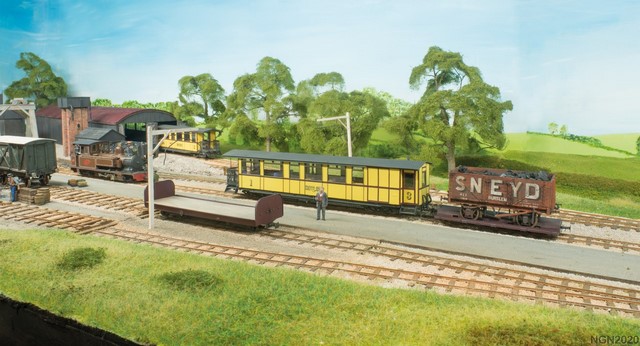
The Leek and Manifold Valley Light Railway was a 2ft 6inch narrow gauge railway completed in 1904 to run from the North Staffordshire Railway at Waterhouses up the beautiful River Manifold Valley to the small village of Hulme End. Hulme End was never intended to be the final terminus of the line which would be extended from there to the town of Buxton. Financial constraints however meant that the Buxton extension although surveyed was never built and Hulme End became the permanent terminus of the line.
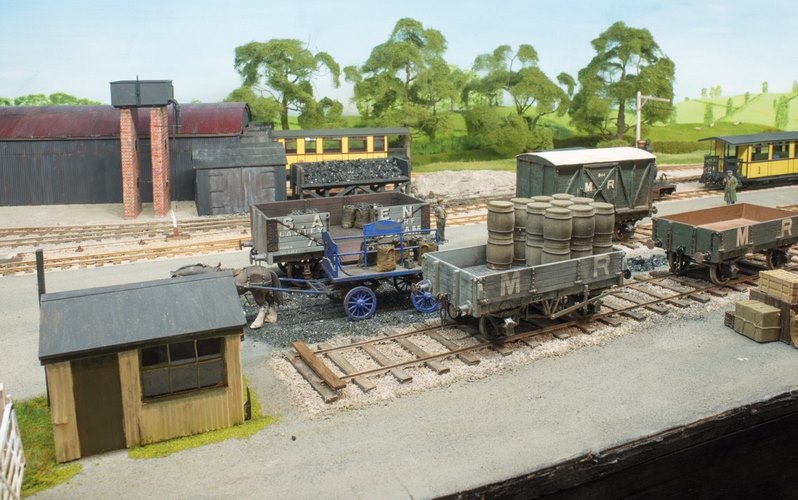
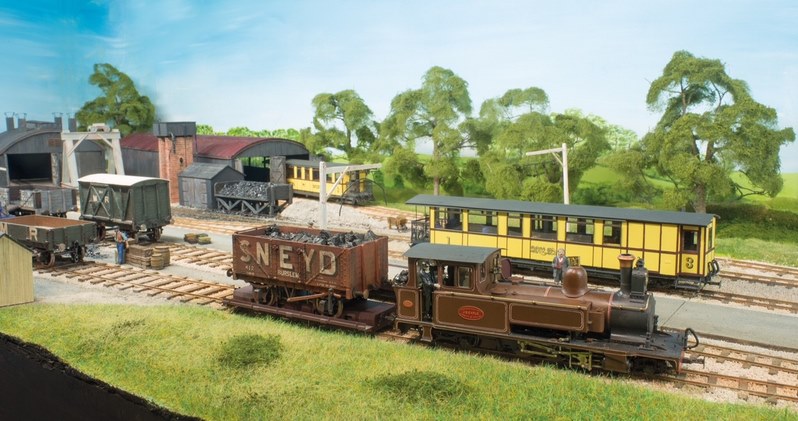
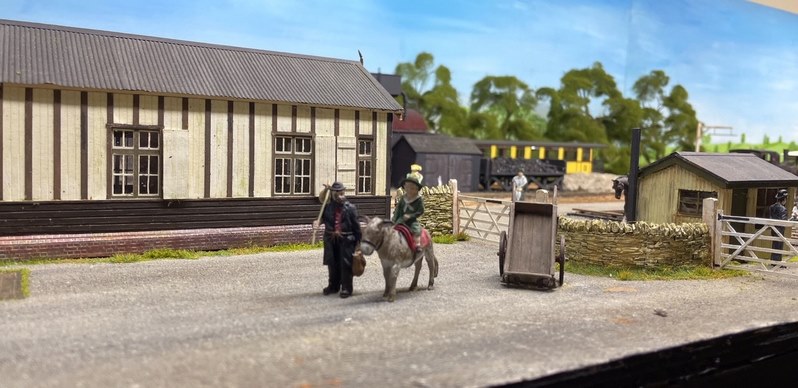
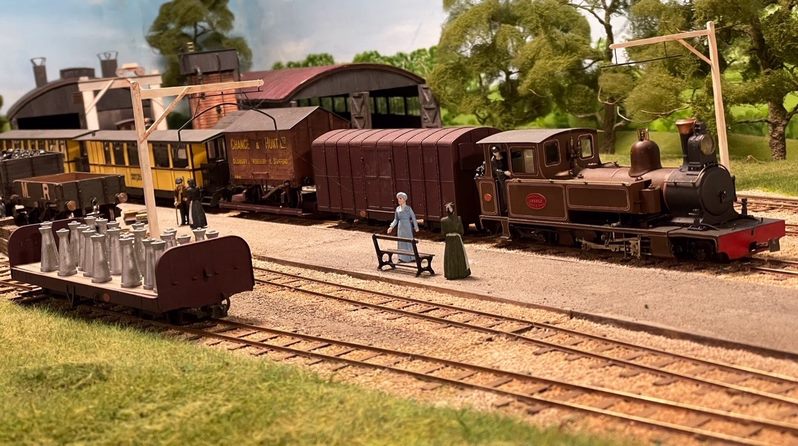
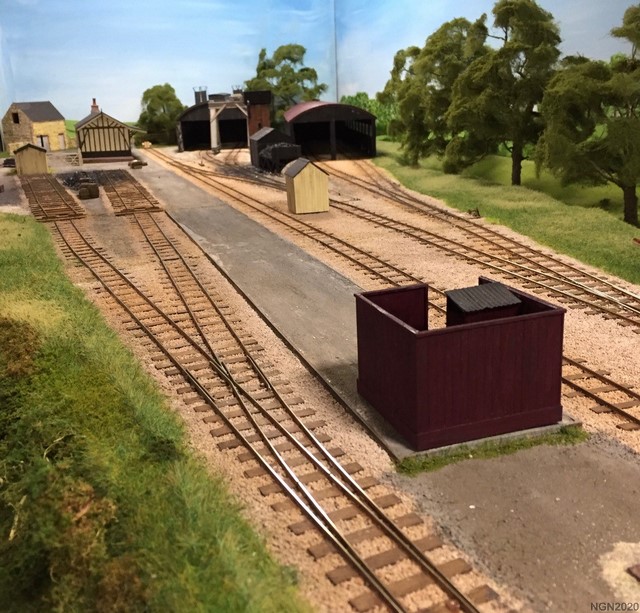
We have modelled Hulme End exactly as it was prior to the closure of the railway in 1934 except that we have added the proposed Buxton extension to our model converting Hulme End into a through station instead of a terminus. The track plan is correct, and the buildings have been made from actual measurements of the station building and rebuilt loco shed which still remain at Hulme End.
On the model we have also tried to feature the standard gauge wagon transporter trucks which were a unique feature of the Leek and Manifold Valley Light Railway, one of the many screw bridges over the Manifold River , and the entrance to Swainley tunnel.
The original station buildings are still standing at Hulme End and today are used as a toilet block and a small museum. The rebuilt engine shed is now a cafe and the old track bed to Waterhouses is now a walking and cycle track. Perhaps after seeing our model of Hulme End you may be tempted to visit the station site and the Manifold Valley.
-
Hulme End
Hulme End
-
Hulme End
Hulme End
-
Hulme End
Hulme End
-
Hulme End
Hulme End
-
Hulme End
Hulme End
-
Hulme End
Hulme End
-
Hulme End
Hulme End
-
Hulme End
Hulme End
-
Hulme End
Hulme End
-
Hulme End
Hulme End
-
Hulme End
Hulme End
-
-
-
https://narrowgaugenorth.org.uk/index.php/societies/previous-years/85-public-news/exhibitors-previous?start=20#sigProId7ff7cd6ba8
Hulme End in 017.5
| By | Paul Holmes |
| Scale | 7mm |
| Gauge | 17.5mm |
| Size | 5.25m x 1m |
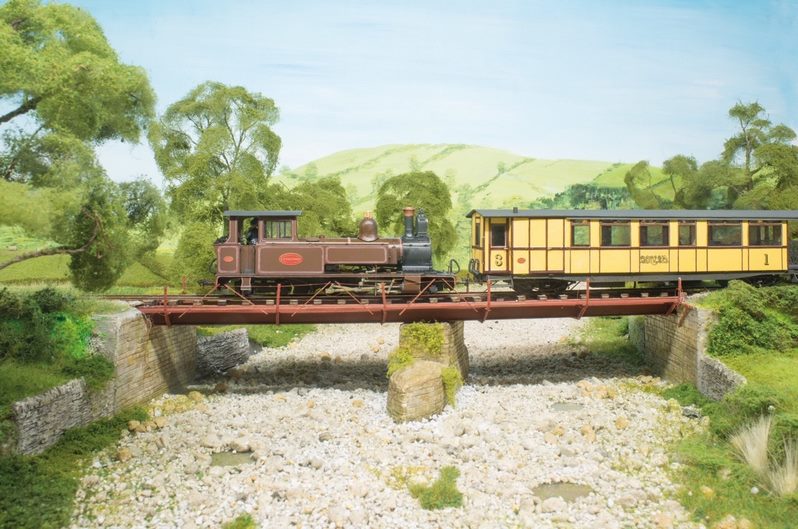
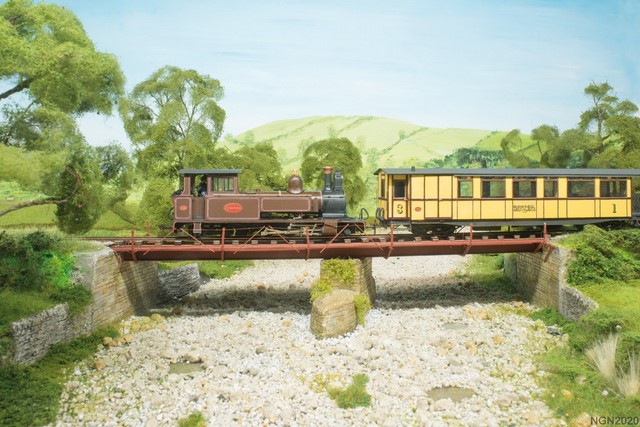
The Leek and Manifold Valley Light Railway was opened in 1904, a 2’6” gauge line from the Staffordshire villages of Waterhouses to Hulme End. At Waterhouses it formed a junction with the standard gauge North Staffs Railway, who operated the narrow gauge line from the beginning. The Hulme End terminus was the centre of operations, housing the engine and carriage sheds with facilities for maintenance of stock.
The model is built to 7mm scale and is set shortly after opening, in the first decade of the twentieth century. I have tried to make it as accurately as I could; this includes the adoption of correct 17.5mm gauge, not the usual 0-16.5. The trackwork is all hand built with light weight flat bottom rail spiked to timber sleepers and the buildings are scratchbuilt from drawings in Bob Grattan’s definitive history of the line. I have tried hard to represent the rural nature of the station, set in the rolling hills of the Staffordshire moorlands.
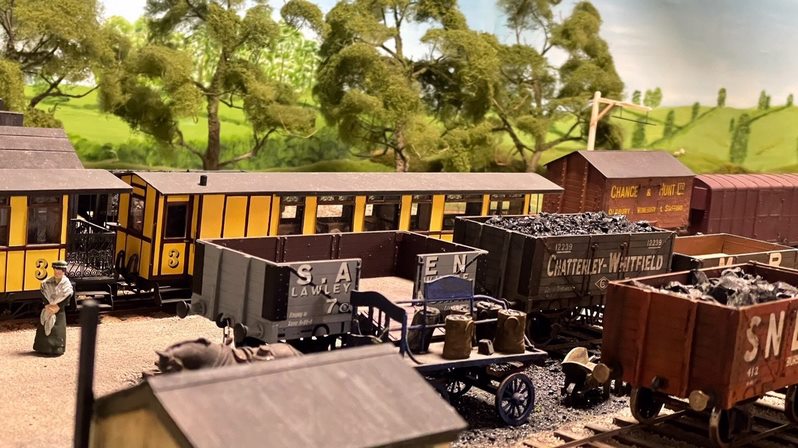
The line only possessed two locomotives, four carriages and eight bogie wagons and these have all been built from available kits. The locos are Slaters and the stock from Dorset Kits; all finished in the early livery – light chocolate brown for the locos and primrose yellow for the passenger stock. The engineer to the line was one Everard Calthrop, a great proponent of narrow gauge lines for the British Empire and the line had a strangely colonial appearance as you can see.
The line ran with a one engine in steam principal, negating the requirement for extensive signalling, but for the exhibition we will fire them both up together! All the stock was vacuum fitted and short mixed trains were very much the order of the day. It was one of very few British NG lines to feature transporter wagons which were used to convey standard gauge wagons from the SG interface at Waterhouses up the line – each station had a short length of SG track at the end of the siding and the SG wagons were pushed by hand on and off the transporters where they could be unloaded at leisure. Hulme End had the luxury of two such sidings.
The model is DCC operated using Lenz control with Zimo decoders in the stock. The locos have sound, smoke, firebox glow and working Walschearts reversing gear.
-
Hulme End
Hulme End
-
Hulme End
Hulme End
-
Hulme End
Hulme End
-
Hulme End
Hulme End
-
Hulme End
Hulme End
-
Hulme End
Hulme End
-
Hulme End
Hulme End
-
Hulme End
Hulme End
-
Hulme End
Hulme End
-
Hulme End
Hulme End
-
Hulme End
Hulme End
-
-
-
https://narrowgaugenorth.org.uk/index.php/societies/previous-years/85-public-news/exhibitors-previous?start=20#sigProId7ff7cd6ba8